Many researchers, instructors, and scientific educators perceive chemistry as a difficult topic for students due to the abstract nature of many chemical ideas, teaching approaches used in class, a lack of teaching tools, and the complexity of the chemistry language.
Students become overwhelmed by the amount of information presented to them in the early stages of learning chemistry, such as understanding the periodic table, different elements, and how they react with one another.
While some students rapidly grasp the principles, the majority find it difficult and perplexing due to a lack of visualisation.
In this collaborative team project, I was responsible to conduct design thinking workshops and usability testings to report actionable findings.
Feb’21 - Mar’21 | 3 months
EdTech | Academic project
PayNearby partnered with nearby retail stores and enabled them with the tools to provide assisted banking and digital commerce services to their local communities. PayNearby transforms the nearby retail stores into FinTech Marts.
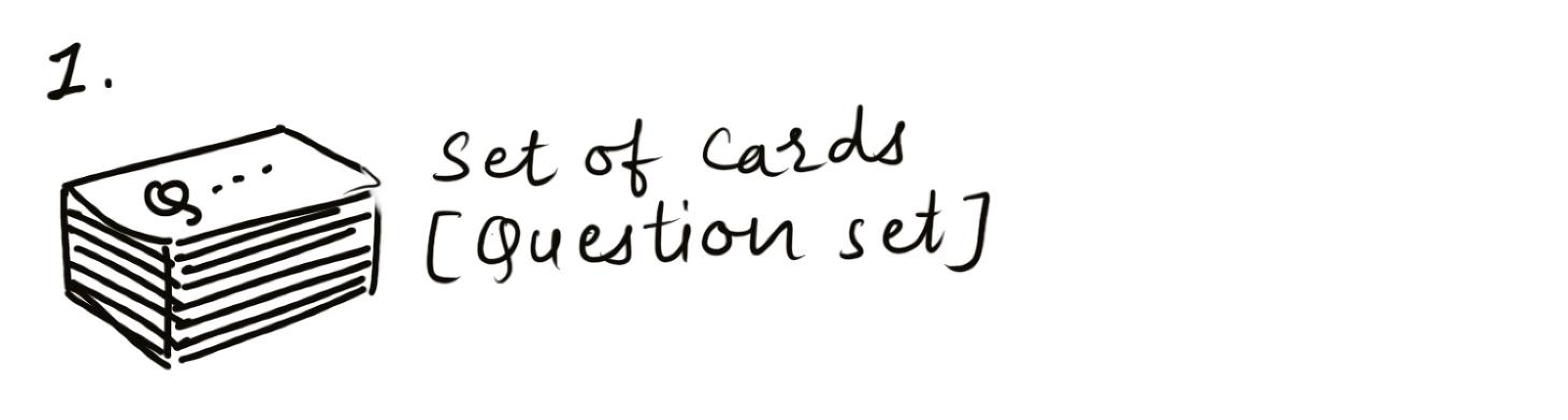
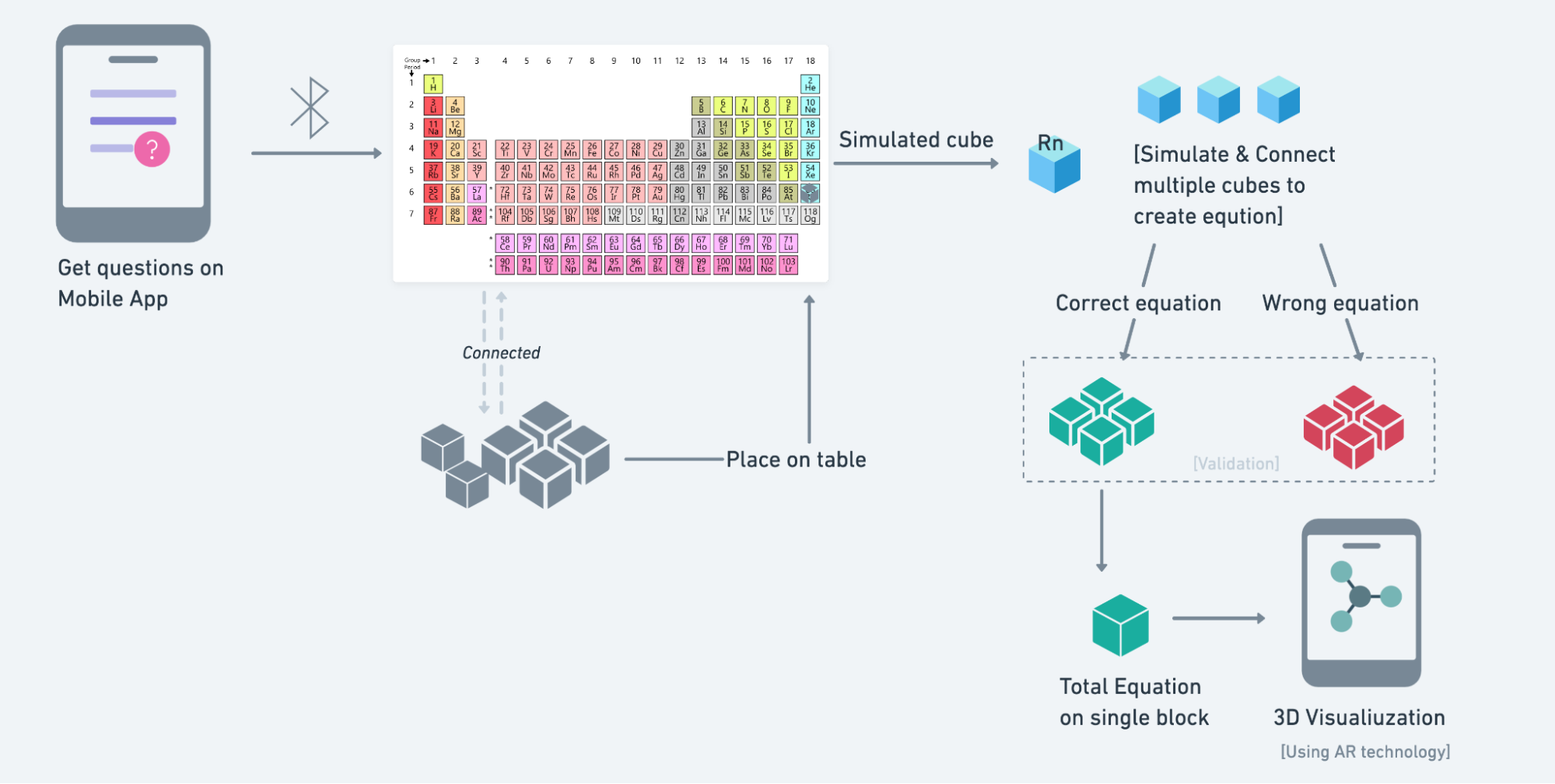
Questions will be displayed on the set of cards. These cards will have questions right from creating elements, simple molecules or balance equations
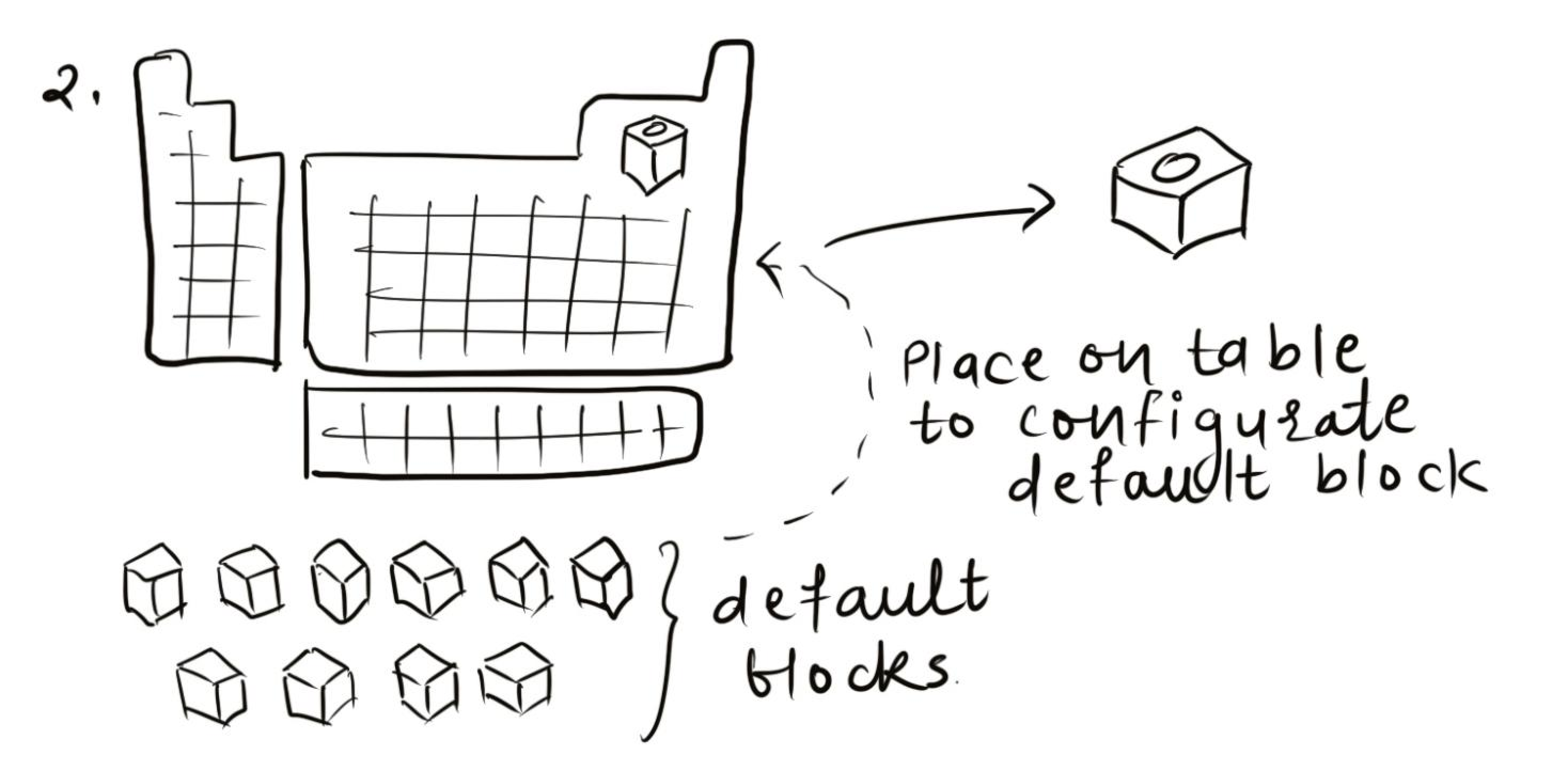
A periodic table board with various elements represented on it. To configure the cube, place it on the element square of the board. The board is magnetic and transfers the element to the cube by contact.
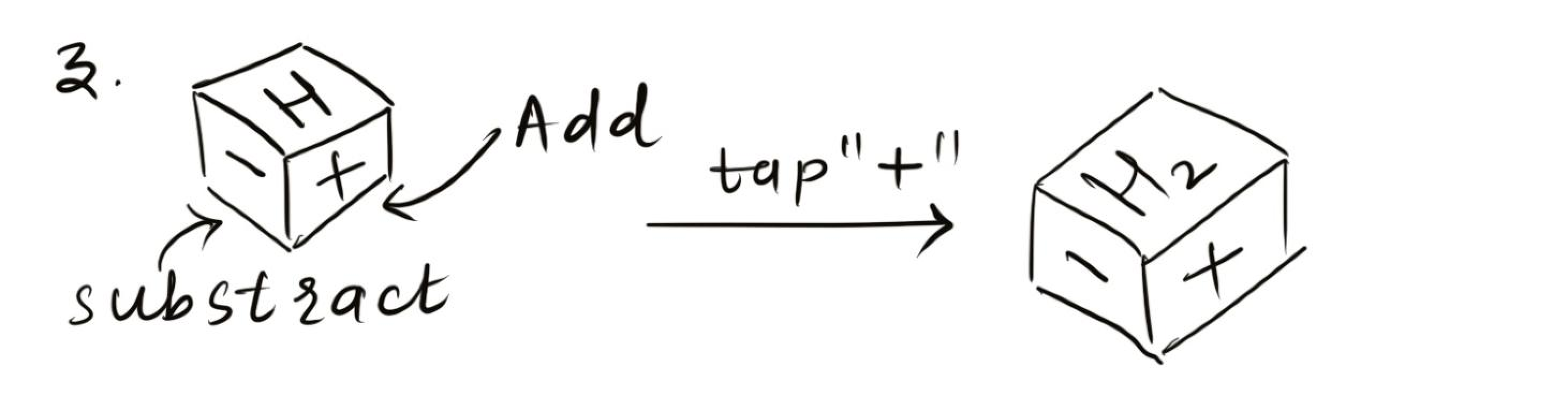
To increase the count of element, for example, from H to H2, tap on the ‘+’ and ‘-” marked on the sides of the cube.
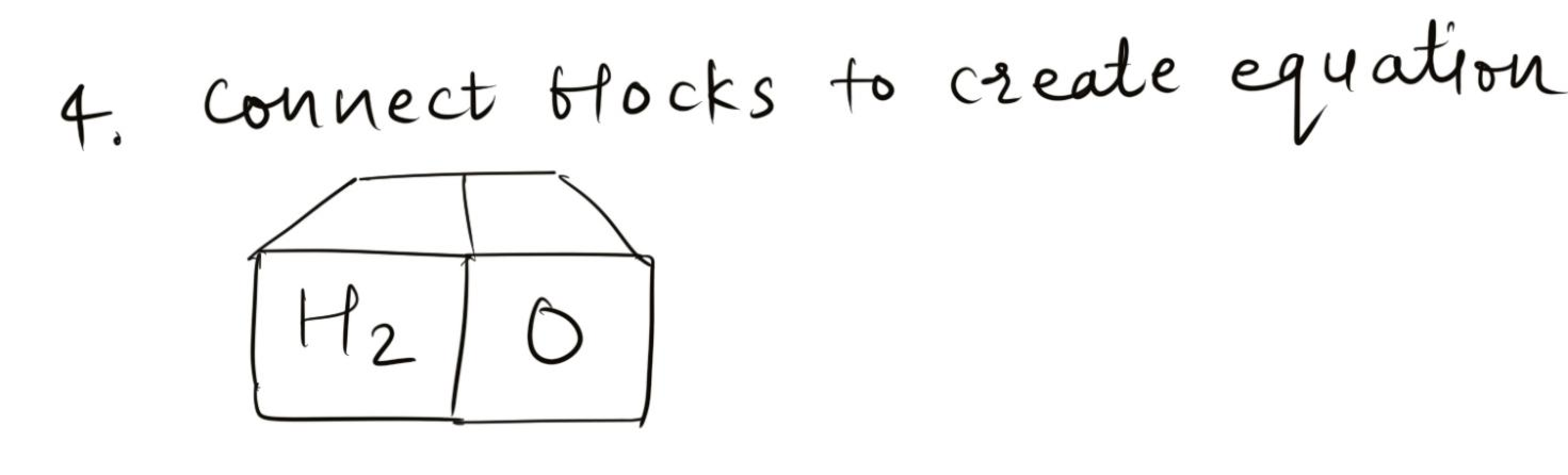
Connect two cubes ‘side by side’ to form a molecule. For Example cube H2 + O -> H2O.

For correct formation of molecules or equations (as shown in the image above) the cubes will momentarily flash 'green' to indicate the correct answer. For any wrong combination, they will flash 'red'. Wrong means, wrong elements and order of elements. Meaning, for the question of creating a water molecule, H2O, if one combines H2 and Cl to form H2Cl or ClH2, it will flash red. The cubes will flash orange for correct choice or elements but from order, like this, OH2.. Prompts users to rearrange the cubes.
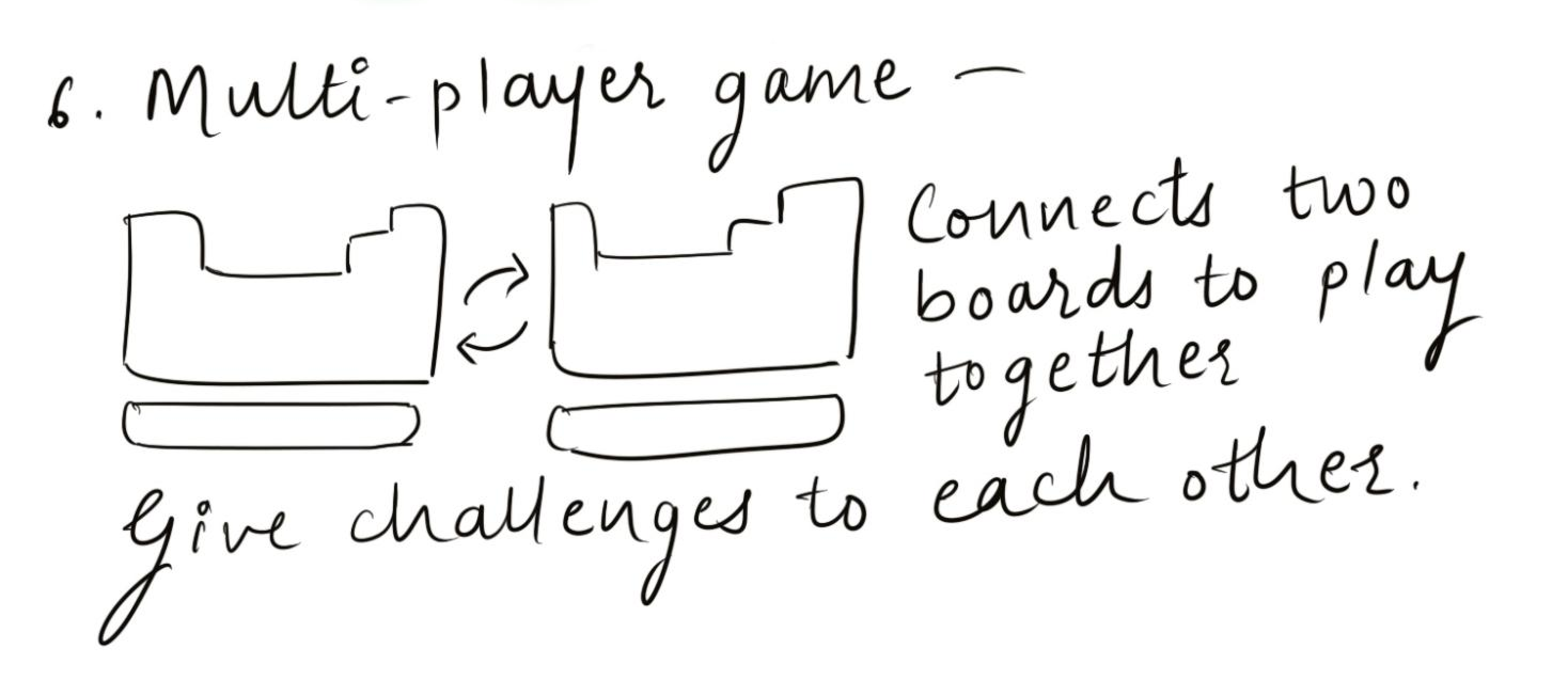
It can be a multiplayer game by connecting two boards together and quizzing each other.
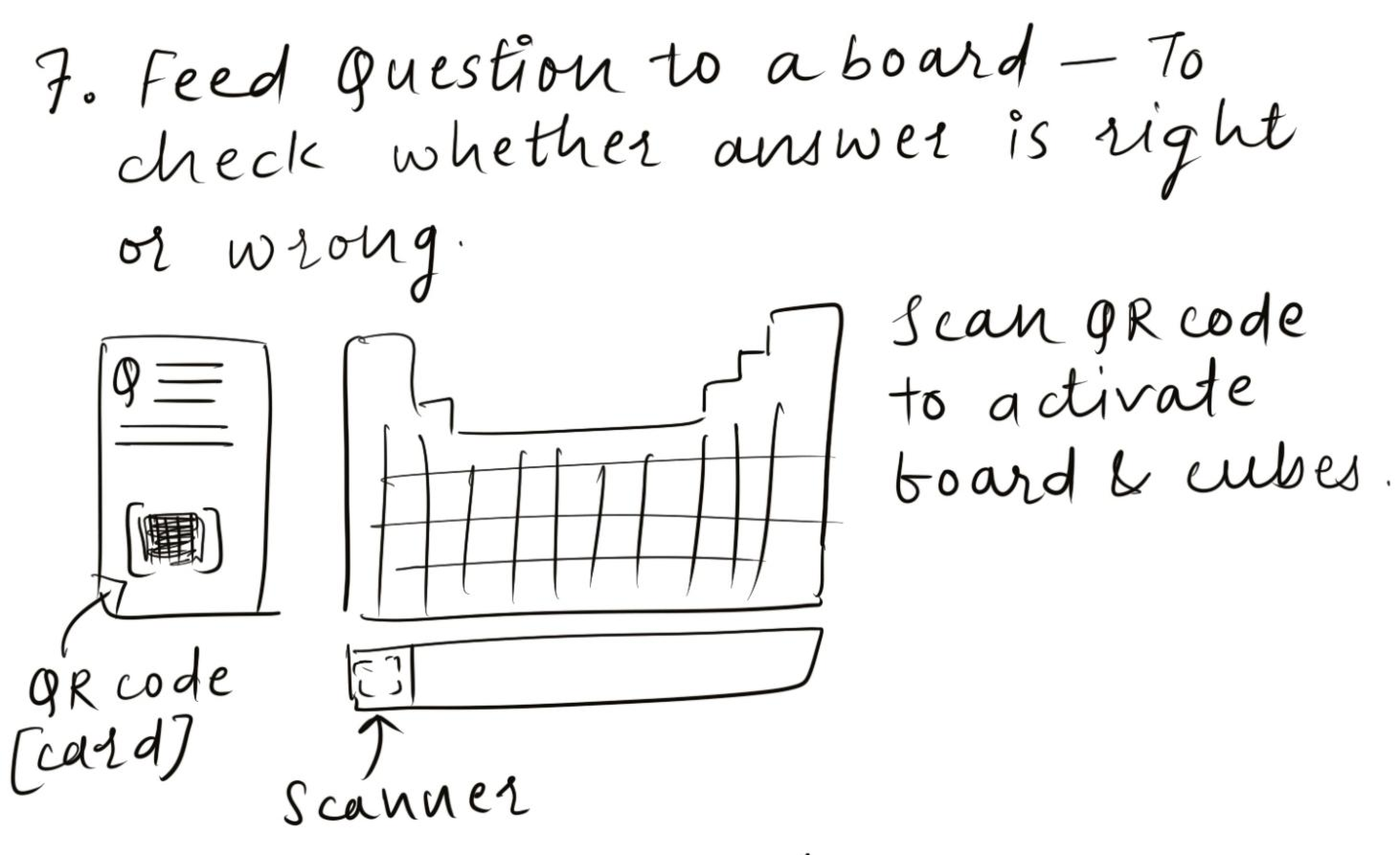
Board and the cubes can be activated with the question on the card by scanning the QR code on the question card on the board. This is to make sure the card and the cubes and the cards know what the question is in order to provide appropriate feedback.
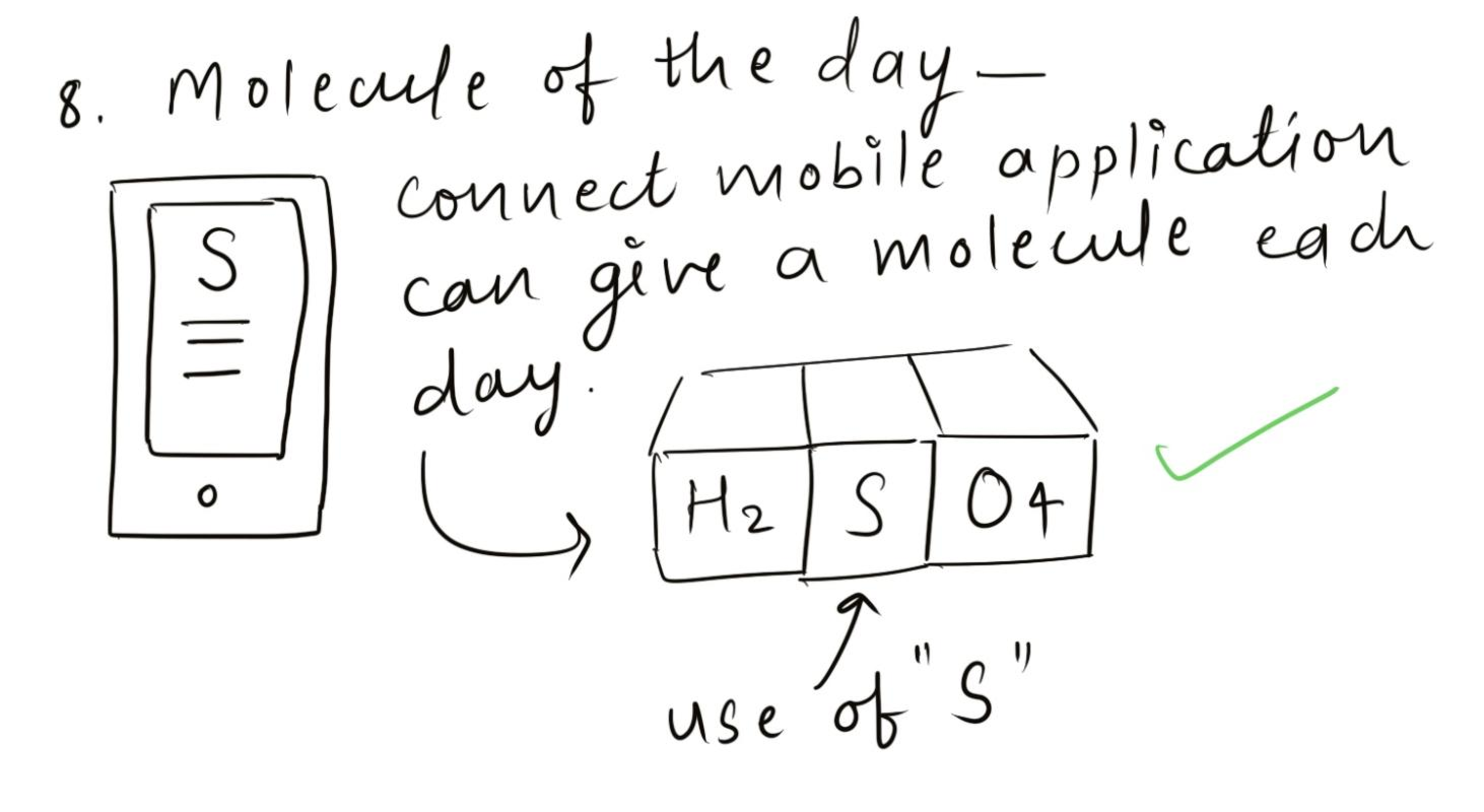
A mobile application with prompts of learning like “molecules of the day” to keep on continuous learning.
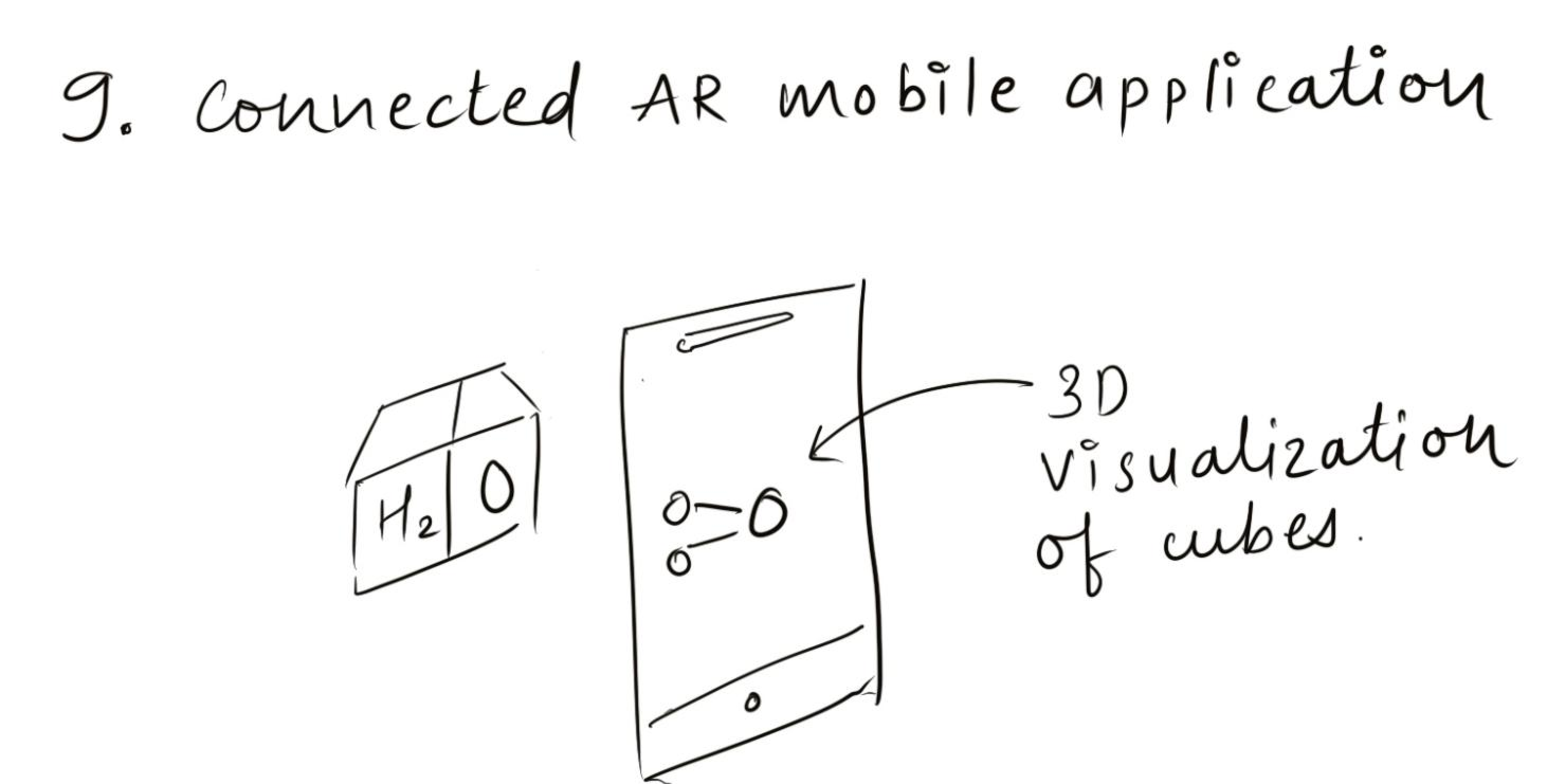
AR view in mobile application to visualise the cubes into a 3D model of the molecule created.
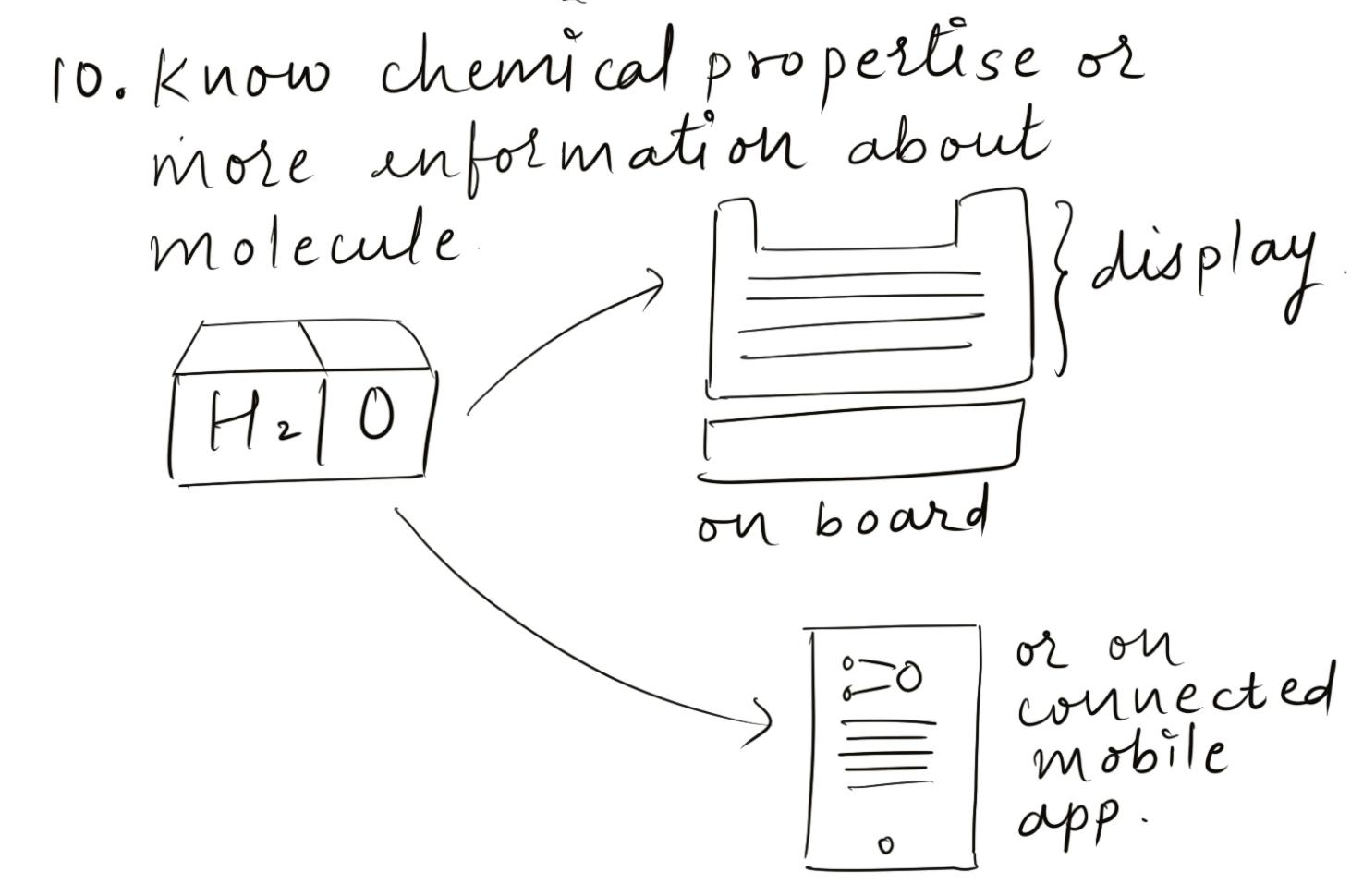
Display of ‘more information’ of the molecules created on the physical board and the mobile application.
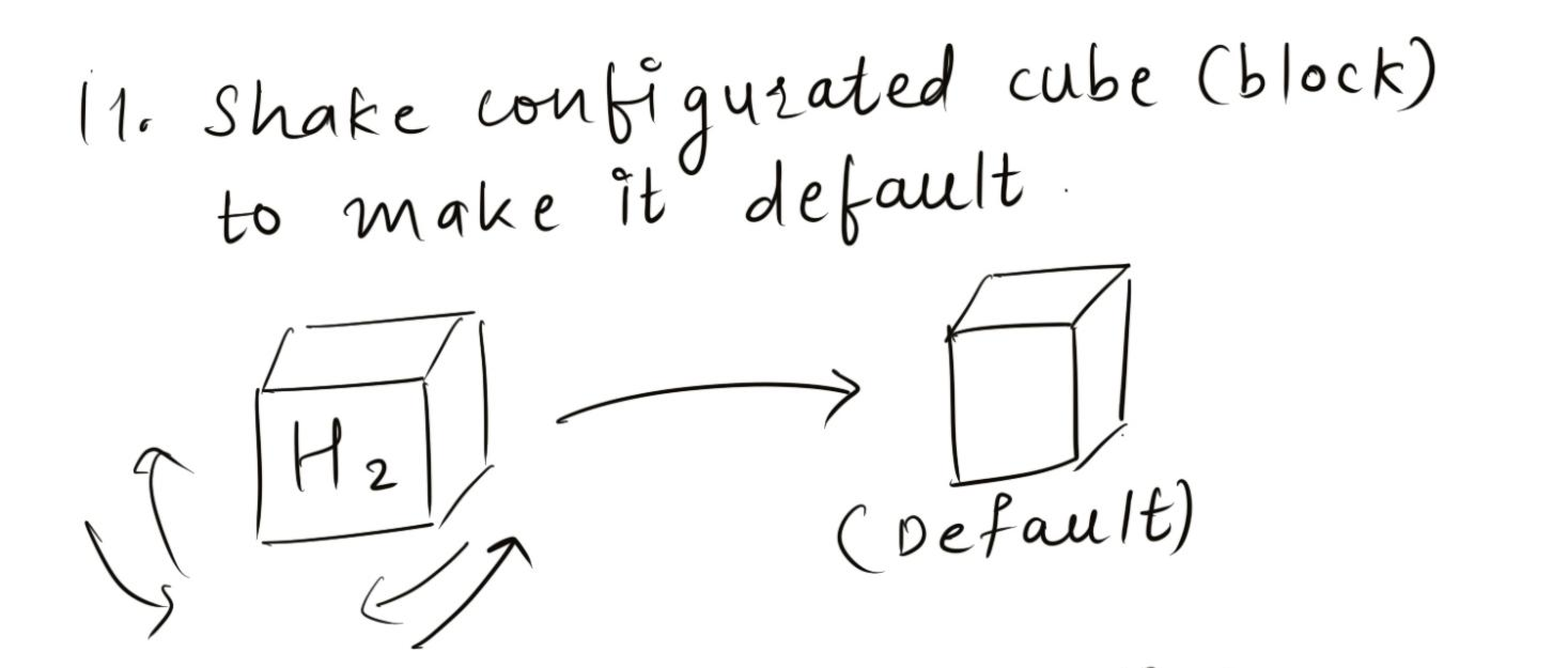
Shaking the cubes to make them back to default.
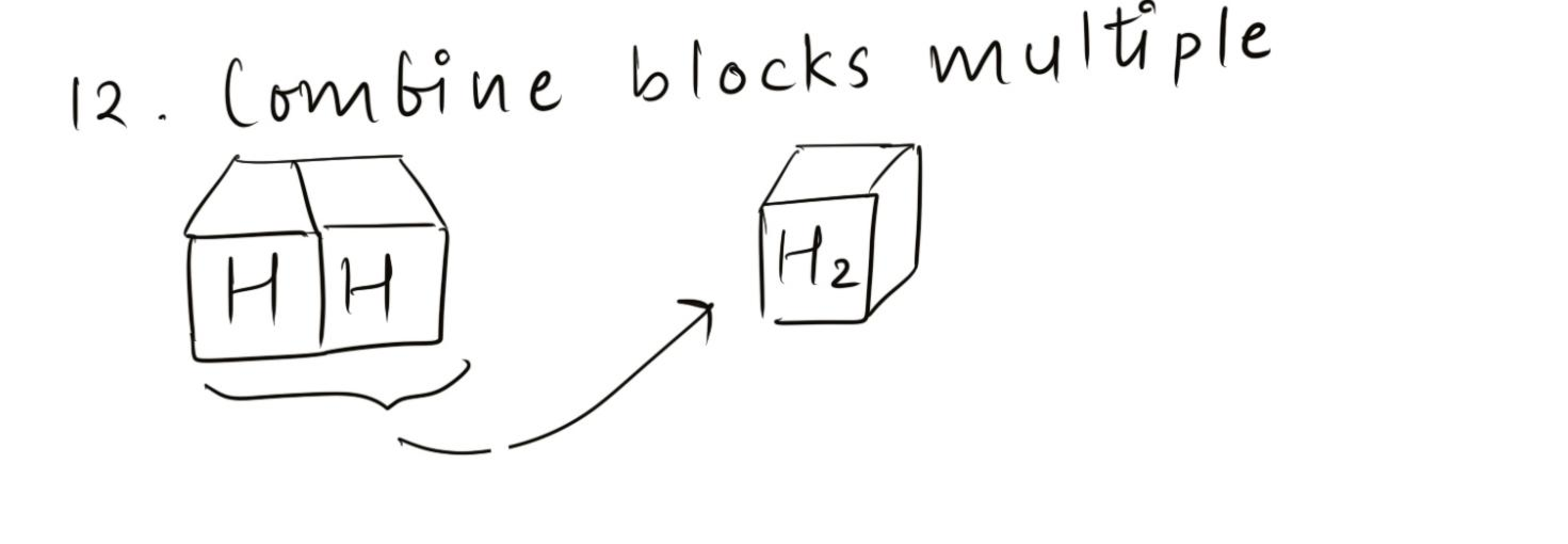
To limit the number of cubes, the cubes can be reused. The way to do this is to transfer the ‘answer’ to the first cube and me the consequent cubes back to default, thus enabling them to be reused
The goal of this project was to create a product that would make it easier for our target audience to comprehend and balance chemical molecules.
When the materials supplied are tangible, it is easier to interpret and tackle any challenge. Keeping this in mind, we initially drew out a system workflow.
After the brief insight presentation, I shared the persona and detailed report throughout the organisation as a shared artefact. The immediate impact is as follow-
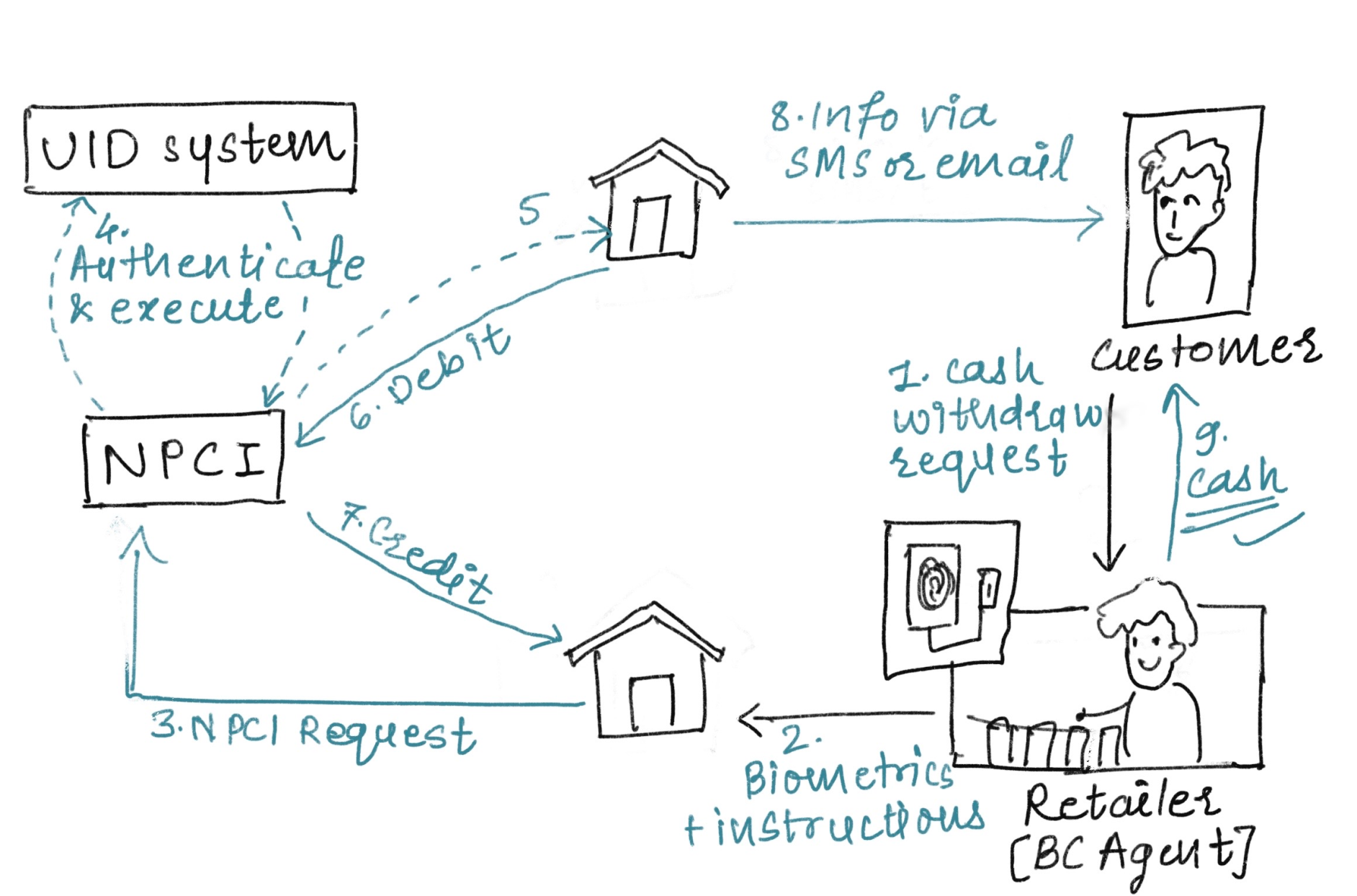
Severe time constraints and less budget made me do contextual inquiry. It helped me to understand users’ service specific frustrations in less time.
Together with the data science team, I recruited 8 retailers within Mumbai who fall into the entrepreneurial Persona category. I scheduled time to meet recruited retailers to know their opinion on the current service. Summarised insights are listed below-
Designs are approved, developed and have already started making an impact in the field.